Pairing Beer with Food: The Final Frontier

As I was eating my Caesar salad earlier this week at Biaggi’s in Eden Prairie (please, it was for work, you think I would normally go to Eden Prairie, much less Biaggi’s?), all I could think about was how my salad would be so much tastier with a nice lambic beer, not unlike the one I had at the beer pairing event I went to the Thursday before. A small group of us sat down with the only female certified Cicerone (beer sommellier) in the United States so she could teach us about pairing beer with food: the final frontier.

The idea itself is an interesting one and not one that any beer fiend (friend?) would not be even slightly familiar with: beer + food = yum. But it goes much deeper than that. Fancy restaurants have been limited to fancy wines with their fancy foods, and cheap restaurants have been limited to cheap beers with their cheap foods (i.e. burgers and buds). But the divide is a divide no more and it is of utmost importance to the beer community that beer regain its rightful place next to wine in fancy restaurants with fancy foods, and maybe even fancy beers with cheap foods at middle range restaurants (like the ones I frequent, and presumably, you too). It’s not a divide; it shouldn’t be a divide. Both beverages provide something different to food that in the end, offers a different experience overall. Various fancy restaurants have caught on to this and are diving right in, trying new things, learning as much as possible, providing the best experience. While smaller middle range places have embraced it fully and made it a mainstay (Muddy Waters?), but it’s not as simply as a long beer list, it’s further and involves a knowledgeable staff and an extensive beer-friendly menu (and the desire to combine the two). Enough about that. Here’s a little bit about what happened:

I walked into the Kitchen Window in Calhoun Square in Uptown; I see it every day (well, hopefully every day) when I go the gym but thought it was nothing more than a ‘kitchen’ classroom learning area to excite people about the store and the available products. I mean, it is, but on that night, it was much more. The lights dimmed, and as I sipped on my ‘welcome beer,’ the mood changed. The Cicerone, Nicole, stopped by my table, asked me how I was doing and what my involvement was in the beer community. Stumbling on my words, afraid to say ‘beer blogger,’ I said very plainly ‘beer enthusiast.’ She smiled, almost a little too long, and said, ‘That’s great! I hope we have fun tonight,’ and walked away. She reminded me of the chemistry types I knew in college, very knowledgeable, a little awkward, with a deep passion for science and trying to explain things to me on an elementary level since I dropped chemistry freshman year. She had brown hair and glasses (not unlike myself, all of my female friends, and pretty much all the girls who graduated from Macaletser during my time; that was for dramatic effect, I don’t think she wore glasses, but I’d bet my life that she was wearing contacts, so the point still stands). I liked her, but I was nervous. I was one of three females in the room; it was me, her, and the wife of what I believe was a brewpub (current or future) owner, but she seemed more into the food. And then there was me, by far the youngest and most bright-eyed, taking notes in my ‘brew book,’ the sacred place I keep notes on my homebrews and beer-related things, not unlike my discarded chemistry lab journal.
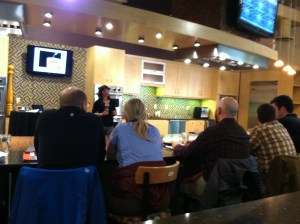
She started with a brief powerpoint on the power of beer tasting and pairings. For most of us, this was the first time we’d gone to a beer tasting, much less one that provided dinner and discussion. So I think everyone was nervous (except for the owner of the Kitchen Window, who sat next to me taking notes on what I believe was the service and how things ran overall, rather than the content). All I could think was, ‘I wish I hadn’t had that beer at Republic before this… and those chips with guacamole.’ I was hungry, thirsty, full, and satisfied all at the same time. But most importantly, I was ready to learn.

First off, let me tell you, there is a lot of science to beer tasting, with discussions of phenols and esthers (I repeat, I stopped taking chemistry years ago). She glossed over it, knowing we were ready to roll up our sleeves and get our palettes wet. The most interesting aspect of the powerpoint was the explanation of how exactly food is paired with beer, either in contrast (also known as ‘cut’) and harmony (similar, I imagine to wine): it either complements or contrasts the food, drawing out certain elements of the beer and/or the food and making you taste them less or stronger. The next slide had a picture of Homer with a thought bubble above his head with a beer in it and he’s saying ‘mmm beer,’ and we began.

The first course was the aforementioned Caeser salad, paired with two different sour beers. The first, a complement, accenting the lemon and parmesan flavors, while the second was a contrast, accenting the breadiness of the croutons (which, interestingly enough, is the point of the croutons to begin with). I am both ashamed and proud to say that this was my first experience with a true Belgian lambic beer (the beer tasting was heaving in these, as she said, Nicole had a background in Belgian beers. How one gets a background in any one style of beer, I don’t know), and it was delicious. It was light, like champagne, but fuller like beer, and made the Caesar salad the best Caesar salad I’ve ever had (which could be in part because I’m not a big Caeser salad person). I decided not to finish the second beer, because these weren’t just 2oz pours, they were almost full beers (in fancy, style-appropriate glasses, mind you), and I had four more to go.

The main course, a margarita pizza made on an Egg grill (which is sweet, and they know it), was next. And this is where things got interesting and she started waxing poetic about beer tasting and the crux of why beer tasting is important, both as a beautiful and flawed art. Tasting is, in essence, subjective, described and experienced only by the taster, but the only way one can become a good taster is by tasting, listening, and sharing with other tasters and beer judges. This made me feel all warm and fuzzy on the inside, thinking that yes, yet again, beer is a social activity that will continue to be so, and relies so heavily on it to flourish. It is not relegated to the ivory tower of elite tasting and enjoying. Everyone tastes certain things better than others (and even master Cicerones have their weaknesses), and because of this, every taster (like every beer drinker) should be heard and respected.
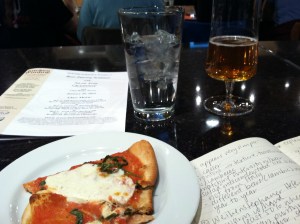
“Close your eyes, smell it, taste it, swirl it in your mouth, experience the beer,” Nicole said. “It’s called ‘vision tasting,’ just let your mind and genetics be free. Talk to others, no one is wrong. They can taste something you can’t. Ask them what their mind came up with.” I was wondering when she was going to ask us to get out our crystals. But then I sort of got into it, letting my mind wander; I thought more about the pizza, the burnt crust and how it reminded me of the pizza we used to have at that one beach pizza place in Bali, until it got too commercial and busy. Mmmm, pizza.

Besides the hippie bullshit, I’m being constantly reminded that I’m being more of a woman than I’ve ever been, hyper aware of my every move, every deliberate pen stroke with my fancy pen in my fancy moleskin. I’m not finishing my beers, I’m not eating my pizza crusts. I’m just observing, writing, and progressively getting drunker. I have to pee. Then they bring out the cheesecake. I hate cheesecake. But I want to see what she’s talking about when she says the next beer is a Russian Imperial Stout which complements the chocolate crust. I used to say I greatly disliked this style, but I’m intrigued, and drink it all. “It’s like having coffee with dessert,” Nicole says, and I completely agree. It’s like the after-dinner coffee without the caffeine and it’s delicious. But then they switch gears and bring out a champagne flute of the fruitiest most delicious berry lambic beer I’ve had (note: I have not had many, I am talking about fruity beers in general). Again, my opinions about fruit beer have changed. I mean, I’m not going to drink it all the time, but there’s a time and place for these, and it was here and now (unlike Berryweiss). It added a deep raspberry accent to the cheesecake which completely blew me away after the previous coffee-like pairing. I wanted it all at the same time.

I downed the rest of my beer while chatting with the owner of the Kitchen Window. A homebrewer himself, this too was his first foray into tasting/pairing and he liked it. The question was, was it worth it for the Kitchen Window? They lost money on the event (despite the $60 everyone threw down), and was this their target audience? Maybe not. Compared to their usual class, there weren’t enough women. Not enough couples. Too many professionals who probably won’t shop at the Kitchen Window even after this positive experience. But that wasn’t the point of the event. It was to learn more about beer and how it can be further integrated into our lives through pairing while understanding why. Isn’t that the future of craft beer and homebrewing, to get more education and drink more (good) beer? Provide that, and the women and couples will come, because they too, are the final frontier of beer.
Beer Dabblin’

I know I should be working on my real work for my real job, but discussing this is of far more interest to me at this point in time. Then I’ll get to work, I promise. This weekend, my boyfriend and a couple friends of mine went to the Winter Carnival Beer Dabbler, which was definitely a good time and a cluster at the same time: a cluster of a good time. Some highlights:

1. After getting pre-wistbanded (their attempt to handle the lines better than last year which one woman claimed were a mile long) at the Bulldog, we went on a hunt for some pre-beer dabbler eats. Lowertown, if you some of you don’t know, is pretty much only bustling during the week when Securian is in session, if you can even call it bustling. We found a variety of places that were either a) packed or b) crappy. So after walking in circles around Meer’s park, we settled on Barrio, a classy Mexican restaurant, where I insisted on getting a pre-beer dabbler Summit EPA (which, as always, was delicious, and went well with my tostada). It all worked out in the end, and by 4 we decided it was time to check out the festivities.

2. At this point, we saw a line going around the corner of the building where we new the beer dabbler was. Thinking, ‘oh yeah, we got prewristbanded, we’re fine’ we walk straight to entrance around the other side of the building, leaving the line behind us. The lovely man told us ever so politely to keep walking straight and to get into the line. Which line, you ask? THE line. The line that went all the way around the city block, that began a mere twenty feet in front of the man who had directed us to get into the line (Which be believed to be starting around the corner, closer to the entrance). He was wrong. The prewristbanding attempt was a massive failure and we waited in line anyway, got reprimanded by a cop for skipping the line (which I promise didn’t make sense), and still weren’t the last people to get into the beer dabbler. If you’re familiar with the farmer’s market, you can imagine how packed it was. Which was fine, until my feet started to freeze, which is no one’s fault but my own.

3. Ok, so no onto beer talk so you don’t just think I was pissed about the line situation and them overselling the tickets the wholetime (I was, and will no longer be attending any of the Beer Dabbler’s illustrious events): the favorite by far was Harriet’s Coffee Elevator Doppelbock. It was the most delicious stout made with Ethiopian coffee I have ever had (bold statement since I had originally thought it was Half Pint’s Stir Stick Stout, which will still always have a place in my heart and then there’s Surly Coffee Bender). I’m trying to get more information about where I can get more of it, and when I have it, I’ll let you know. Harriet has seriously proven themselves to be a great addition to the Minnesota Beer Scene.

4. A conversation I had with a guy waiting in line for Crispin: for the last three or four beer fest type events Crispin has shared theirspace with Fox Barrel, which definitely confuses people. They assume that that’s a kind of Crispin, which means a) they’re idiots, and b) Crispin isn’t differentiating themselves enough (or maybe Fox Barrel isn’t either). Either way, it’s spurred my deeper interest in ciders, which I will be posting in later blogs. But know that Fox Barrel is different from Crispin. They are not from Minnesota (California) and they only do pear cider. It’s actually pretty good stuff, and ciders in general are on the up and up. So why not try one?

5. I submitted my homebrew (that Mike and I made: a honey ginger IPA) in a homebrew competition for the first time. Yeah, yeah I know it’s something I should’ve done a while ago, considering my history with homebrewing (I mean, I’m not a 55-year-old dude who has been brewing since his 20s. I’ve been brewing for about four years). But I finally did it! I’ll let you know how it goes. I got a $5 gift certificate for Northern Brewer for even submitting my beer (which was a surprise to me) and like not worth that much but it was nice, for my next homebrew supply trip. I did realize, that I hadn’t taken off the old labels off my bottle (it was a reused Magic Hat bottle), so woops, it might be disqualified but they’ll still rate it. Either way, I’ll let you know! I’m excited!

6. I discovered there’s a new Wisconsin brewery that opened in Menomonie called Lucette. At first, the logo confused me, I thought it was some weird architectural black and white POS, then I realized it was a woman, like a mud flap pin-up, which is the same image on their taps. Their website says,“Lucette is hand-crafted by guys and brought to life by the artistry of a woman. Don’t be offended or embarrassed by her voluptuous curves or stunning assets—she isn’t. Lucette is an image of revolution and evolution, much like experience a non-macro beer for the first time. And what’s more, she is created from the finest ingredients by the hands of our own brewers, at our own brewery, and not by some mysterious brewery far away from “home.” In other words, she is not fake, diluted, or overproduced—she is 100% Lucette.” I’m torn, because this is a great way of describing a beer and their mission, and right on par with the market of men loving beers that say something about women (positive or negative, generally in pun form, e.g. Flying Dog’s Raging Bitch, which has had its share of issues with feminists across the United States). It’s just so… man. Of course all the brewers are men, and of course this idea of the ‘not fake, diluted or overproduced woman’ is the pin-up with big boobs and a tiny waist. It just confuses me (maybe because they called me out on it from the get-go, telling me not to be offended), and makes me wonder if they’ve even thought this hard about it. Probably haven’t, but who IS Lucette and what does it actually mean?

Ok, so that’s about it. Relatively uneventful underwhelming time at the Beer Dabbler, although I did get some free swag and cheese out of it (there was a huge line, of which I did not partake). I think I’m going to stick to just the St. Paul and Minneapolis Beer Fests from now on.

Minnesota, Know Your Local Breweries

Dearest readers,

As I sit in my not-so-cubical cubicle, I think to myself, what advice/knowledge can I impart on my avid readers today? As I peruse my daily blogs and articles about beer and the like, I realize that I find myself getting excited daily (yes, daily) about the new breweries that are opening up in the Twin Cities. Here they are, in lists, for your reading pleasure. Each brewery is linked to their website,and I’ve also made some brief comments about their flagship (first and best, generally) beer and their other good beers, if they got them. I don’t know if I’ve ever said this, but I’m always open to discussion and suggestions, so although I give off this air of over-confidence with my ‘know-it-all’ attitude, tell me what you think or if I missed anything!! Also, check out this related City Pages article.

The Ones You’ve Probably Heard Of (Good for you):
1. Summit: famous for their EPA, which is delicious, but I recommend the Oatmeal Stout
2. Surly Brewing: famous for their Furious, which is delicious, but I recommend the Coffee Bender
3. August Schell (related: Grain Belt): Famous for… being from New Ulm, the most German part of Minnesota; Grainbelt is cool because I work down the street from the old brewery (they were bought by Schell in 2002, but were originally brewing in NE)
4. Finnegan’s: famous for being at all of Macalester’s SpringFests until Surly came around. Contract brewed by Summit, but a very average beer IMHO.
5. Liftbridge: famous for y’know, the Stillwater liftbridge, and beer (flagship: Farm Girl)

The Ones You Probably Haven’t Heard of (Shame on you):
1. Brau Brothers: Try the Moo Joos, it’s delicious
2. Flat Earth Brewing: The Angry Planet is the best
3. Fulton: Sweet Child of Vine is their best, and they just got their first real brewery (in Mpls near the Twins stadium!)
4. Staples Mill Brewing Company: I had the Stout of Morning Destruction the other day and it was epic — 750ml limited release bottles, and so yummy in that drunk-after-breakfast on coffee/beer/bourbon type way
5. Lake Superior: The Kayak Kolsch is my favorite, which is weird because I normally like stouts, but it’s a great summer session beer*

The Newest Ones (Get with the program):
1. Lucid Brewing: Minnetonka has a brewery now, too, say what?!
2. Harriet Brewing: I’ve had the West Side, it’s awesome, and this Friday they’re having their one year anniversary at the Blue Nile!
3. Dangerous Man: This dude is a baller; there are antiquated MN laws about having a brewery within some amount of feet of a church and unlucky for him, NE has a lot of churches and a lot of nice spaces for breweries so he’s had to fight for his right to brew, so double support him (plus, sick logo!)
4. Steel Toe: SLP representing! The Number 7 I had at Muddy Waters was fantastic, I WANT MOOOAR
5. Mankato Brewery: So, so fresh; they were recently looking for support to start up operations (again?)
6. Boom Island Brewing Company: Across the river from my work, I only just heard about them and haven’t tried any of their beers
7. Bemidji Brewing Company: Even fresher than fresh, their website is not even complete and they’re still asking for support

The Ones That I Hadn’t Even Heard Of (and don’t have opinions on, unfortunately):
1. Big Wood (Vadnais Heights, MN): The newest of the new
2. Leech Lake (Walker, MN): I’ve heard more about them recently but I don’t know how new they are
3. Olvalde (Rollingston, MN): I lied, I think I’ve actually had/heard of one of these Farmhouse Ales
4. Dubrue (Duluth, MN): Apparently all up in Duluth, I had no idea
5. Castle Danger (Two Harbors, MN): New as of March 2010, looks pretty sweet

The Ones That Don’t Really Matter But Are Still Interesting (Not craft breweries per se):
1. Cold Spring: A lot of historical significance for the MN beer scene, but generally average beer
2. Pig’s Eye Brewing Company: Gross cheap-ass beer, but still exciting because St Paul was almost called Pig’s Eye, which makes no sense — silly pioneers
3. Vine Park: Doesn’t count because it’s like homebrewing extra light; you go there, they brew for you, you call the beer your own — good for corporate parties

Brew Pubs of Note (My favorites):
1. Fitger’s (Duluth): Home of one of my favorite stouts of all time, the Big Boat Oatmeal Stout; definitely the best brewpub in Minnesota
2. Town Hall Brewery (West Bank): An awesome brew pub, great food, topical beers that they brew, and just a neat building overall
3. Herkimer’s (Uptown): Uptown’s only brewpub? I feel like I find myself here when other (better?) places are full… but still good

For more about good brew pubs, check out this article from Michael Agnew (A Perfect Pint)

A message from the MN Craft Brewer's Guild

——–

* (Thanks to Blackmer for bringing this up, sorry!) ‘Session Beer’: a beer that’s light/pleasant enough to drink many of in one session (ie. a beer you can drink lots of, not drink one of and feel like you ate a steak, had a milkshake, and just want to take a nap like the big baby you are. This is especially important in the summer when you’re doing a lot of session drinking and I mean, it’s summer, so you don’t want to gorge yourself on Russian Imperial Stouts for hours, if you know what I mean).

A Brief Yet Watered-Down ‘Triple-Hops Brewed’ Introduction to Homebrewing: The Basics

There’s been a lot of talk about homebrewing; around the office (if your office is filled with cool Millennials doing projects about Millennials, like mine is), the water cooler (if you have one to go with your pager), among your friends (if they’re cool enough, like mine), in the gchat (that we’re all on all day long anyway, except for Hannah), the text messages (Maybe), all up on your tweeter with the twatterings (ok, just mine), but I bet you’re thinking to yourself, ‘WTF is homebrewing? I can haz confuzzon.’ Here is Liz’s brief yet watered-down introduction like the ‘triple-hops brew’ we know and love (ahem, Miller, get with it, you can’t add one hop leaf three times during the boil and claim it’s triple-hopped), just the basics. We can get into nuance later. I’m here to enhance your life, not confuse it. So here we go.

It’s important to note, that this is meant not necessarily as a guide to start homebrewing for the first time, because if you were, I would direct you to a very different set of reputable resources (which I will do anyway, in future posts/pages) that aren’t speckled with my loving anecdotes and sparkling rhetoric, as much as I know you value them. This post is meant to give you an overview of what homebrewing is and how it can help you understand what breweries do when they brew their beers (although they do it on a much larger scale, duh, while homebrewing is generally done in 5 gallon batches, resulting in approx. 50, 16 oz. beers). A big thanks to Dajana from work for taking these photos during our work homebrewing session this summer that I have included to help you undersand what I’m talking about if you didn’t already know.

1. The recipe, the equipment, the time.

Find a recipe, either on the internet (there are a billion websites), in a book (there are a billion books), from a friend (maybe you don’t have a billion homebrewing friends, but you can make them), from a kit (a pre-made box full of everything you need, all measured out and ready for your use) or from your mind (bold move). Find the equipment you have lying around your house/basement/garage/trunk and clean the shit out of them (if you’re like me and have stuff that you never really cleaned that well from the last time you last-minute brewed). Find the time to brew. Depending on how you go about it, brewing can take 3-6 hours and is best done with a beer in hand. I like to take the easy way out and do the 3-hour path, but it’s totally up to you, and you’d probably be cooler if you took the more challenging route (think ‘The Road Less Traveled’). I will be discussing the 3-hour path here (also known as ‘extract brewing’ but you could also do it with the ‘partial mash brewing’ method).

2. The big-ass brew kettle.

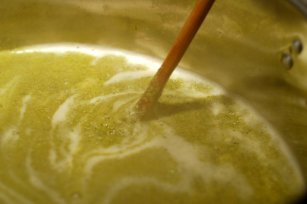
I don’t want to get too detailed, but the Miller version: you boil water in your big-ass brew kettle (3 gallon), and add various things at various points. Like I mentioned in my previous post about the different beer styles and beer basics, the ingredients (water, malted barley/grains (the sugars), hops, yeast) are generally added in that order. The most important part of the process in which you add things is called ‘the boil,’ when the wort (as unfermented beer is called—pronounced like wert rather than wart, if you know what I mean) is at a rolling boil and hops are added. In general, the boil is about an hour, with ‘hop additions’ mostfrequently occurring at the beginning and towards the end (for that respective impact on the flavor of the beer; in the beginning it affects the overall body/flavor of the beer, while at the end, it affects the ‘finish’ of the beer). There are also a wide variety of hops that add different elements to the beer, so it’s not like all beers have hop additions of the same hop at different times, in fact, it’s pretty rare, but again, up to the discretion of the brewer—the hop chef. You’d be interested to know that hops are the only other relative of the marijuana plant species (they’re both cones), which is why sometimes when you’re drinking a really hoppy beer (or smelling straight-up hops as one often does) it reeks of that weed-like skunkiness.

3. The chill, the pitch

When the boil is done, it’s your sole goal to chill that wort as quickly, efficiently, and with as little contamination as possible so that, when mixed with water, the wort is at a temperature in which the particular yeast cells can thrive to make that wort into beer (yeast + sugar = alcoholz + CO2 and other byproducts). Like hops, there are many different kinds of yeasts, all that have a different impact on the beer and are meant for certain styles of beer or more practically, fermentation temperatures*. So you chill (literally) for a while. Sometimes in the snow. When the wert is at a satisfactory temperature, you pour it into the fermenter (preferably a glass carboy, if you’re using plastic, you haven’t lived. You owe it to yourself to get a glass carboy and be an adult about this). You add some water and then you ‘pitch’ the yeast. Pitching the yeast is a fancy way of saying ‘put the yeast in the wort,’ but it sounds cooler to say ‘pitch,’ and then you sound like you’re a) doing something special and b) know what you’re talking about.

4. The wait.

You chill some more (this time in the cool, not cold, way) for several weeks, months, or if you want to go there, years. You let the beer do its fermentation thing. You check it daily to make sure it’s looking good, to watch the movement, and feel the warmth (I kid you not, during fermentation it emits heat which you can feel). Eventually the fast bubbles and movement will stop and that means the primary fermentation is complete. Then you do some stuff (‘move’ the beer between carboys if you want to, add some things, or don’t, check some things out, etc.) and wait a little more.

5. The bottling.

There’s a scientific point at which the beer is supposed to be ready to be bottled (or kegged, if you’re fancy), but I rarely test that (it’s called gravity and you do it with a hydrometer), and I’m ok with that. I just go by time and my gut (i.e. beer belly). Beer’s good like that – so forgiving, and will probably taste great anyway. You do a two-hour long process called bottling that requires the help of at least one other person (if you’re like me, incredibly weak, and can easily coerce friends into helping you, especially since they know they’ll be drinking it later). You add a little bit more sugar to the bottles of beer and cap them. Some of the remaining yeasts eats that sugar to create CO2 bubbles INSIDE the beer. Sometimes beers explode. It’s an inexact science. You wait at least two more weeks, sometimes three, and then you’re ready.

6. The drinking.

Pretty straight forward. Because it’s homebrew (I repeat, ‘inexact science’) there will be a little bit of sediment at the bottom of the beer, which although isn’t harmful, isn’t ideal to fully taste and enjoy your beer. So when you pour your homebrew into a glass (which you should always do; even if you don’t have pint glasses, dear God, pour it into a glass), don’t swish it around in the bottom of the bottle as you pour because that just encourages the sediment to get mixed up in the good stuff and leave at least a half an inch of liquid at the bottom of the bottle to further prevent this from happening. You want to be able to see the unadulterated unpasteurized beer in the clear glass, see the bubbles dancing up the sides, smell the amorous aroma of the beer, and revel in your glory as it tingles your taste buds.

* Ok, here’s the truth: I wrote this post before the previous one titled ‘Ales and Lagers: Best Friends and Lovers, the Yin and the Yang, the Dr. Jekyll and Mr. Hyde’ but decided I was getting ahead of myself and need to first introduce you to the basic concept of what makes different beers different from each other.

Ales and Lagers: Best Friends and Lovers, the Yin and the Yang, the Dr. Jekyll and Mr. Hyde

I realize that some of you may already know the differences in different styles of beers, so forgive me if I’m assuming the worst, but bear with me. I need to do this so I can feel ok about talking about beer styles and other beer-related things. I just want to make sure everyone’s on the same page. If this is like taking 8th grade math and you’re a regular Tom, then go to the head of the class and shut up. Here we go…

Not all beers are created equal. In fact, that’s why they’re so beautiful, like the people of the world, each one is different and unique, with a different look, taste and smell. The ingredients are the same, in concept, but there are different KINDS of ingredients that change the outcome of the beer. Ok I’ve gone away from the ‘we are the world’ analogy, but I think you get the point. The four main ingredients in beer are: WATER, MALTED BARLEY/GRAINS (SUGAR), HOPS, YEAST. No one ingredient is more or less important and they all play a role, if you change any one of these elements in the slightest way, even if you change how much or when you added it during the brewing process, you create a different beer. Did I mention that’s why beer is beautiful? It’s like a chemistry equation you can keep changing (and not necessarily in ratios) that still results in the same great thing (assuming you don’t screw up too badly).

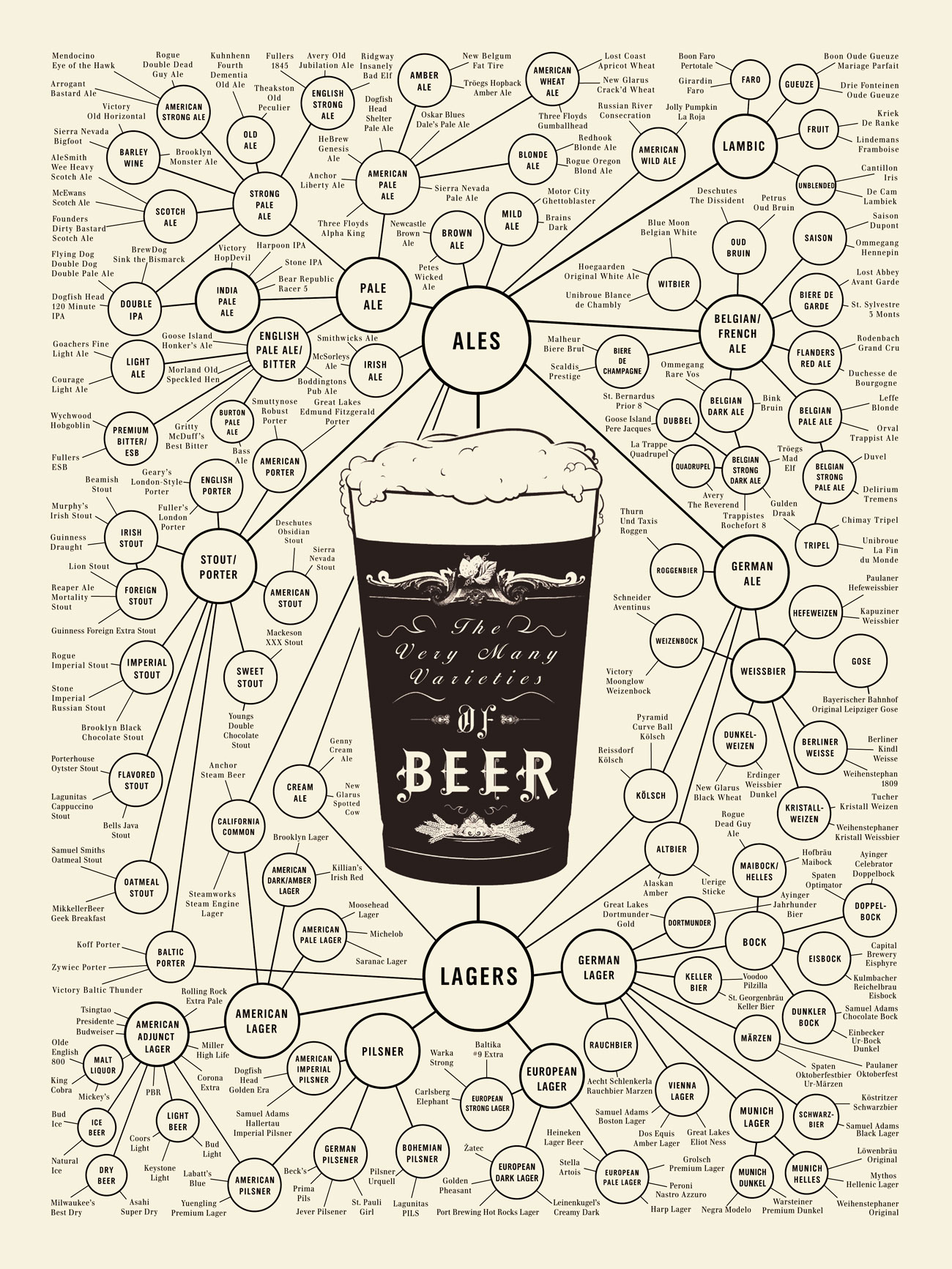
So, as you guessed, the variation in the ingredients is what makes different styles of beer. You may have heard of various styles, know a little bit about certain ones, have preferences, know which ones to avoid, and that’s great, you should. You should know these things if you’re drinking the stuff. There are two main categories of beer styles: ales and lagers, and then a ton of ones that go in each of the categories (and of course, some outliers). Ales are beers that are made with yeasts that are generally top fermenting and are fermented at higher temperatures (not hot, but warmer than lagers, think room temperature) while lagers are beers made with generally bottom-fermenting yeasts at lower temperatures (a little bit like refrigerator temperatures). Because ales are at higher temperatures and there is a wider range of yeasts available, there is a wider range of flavor profiles and styles within ales. Also in general, for homebrewing, lagering is much more difficult because it requires lower temperatures that a basement generally can’t provide, and ales are just more fun and vibrant (like young people). I’m not going to go into the styles that are considered ales and those that are lagers, that’s a lesson for a different day. We have to start small. Like my math teacher in high school used to say, you can’t build a house without first building the walls. And if you build crappy walls (with holes… in your education. Get it?) the roof will fall in on you. And you will die. However, for a taste, see the awesome image below for an overwhelming yet beautiful description of beer styles (note: this is not my image, but I love it and it’s beautiful and I want to buy it, or you can buy it, or you can buy it for me if you’d like, I’d love that, here).

In conclusion, and in reference to the title, ales aren’t really the Dr. Jekyll to the lager’s Mr. Hyde, but you see what I’m getting at—you can’t have one without the other and they’re both beers. There are good lagers and bad ales, and awesome ales and awesome lagers because they’re all beers; it’s all part of the circle of beer life.